
Ted Morrison's riotously pretty Welsh cottage is the perfect weekend bolthole
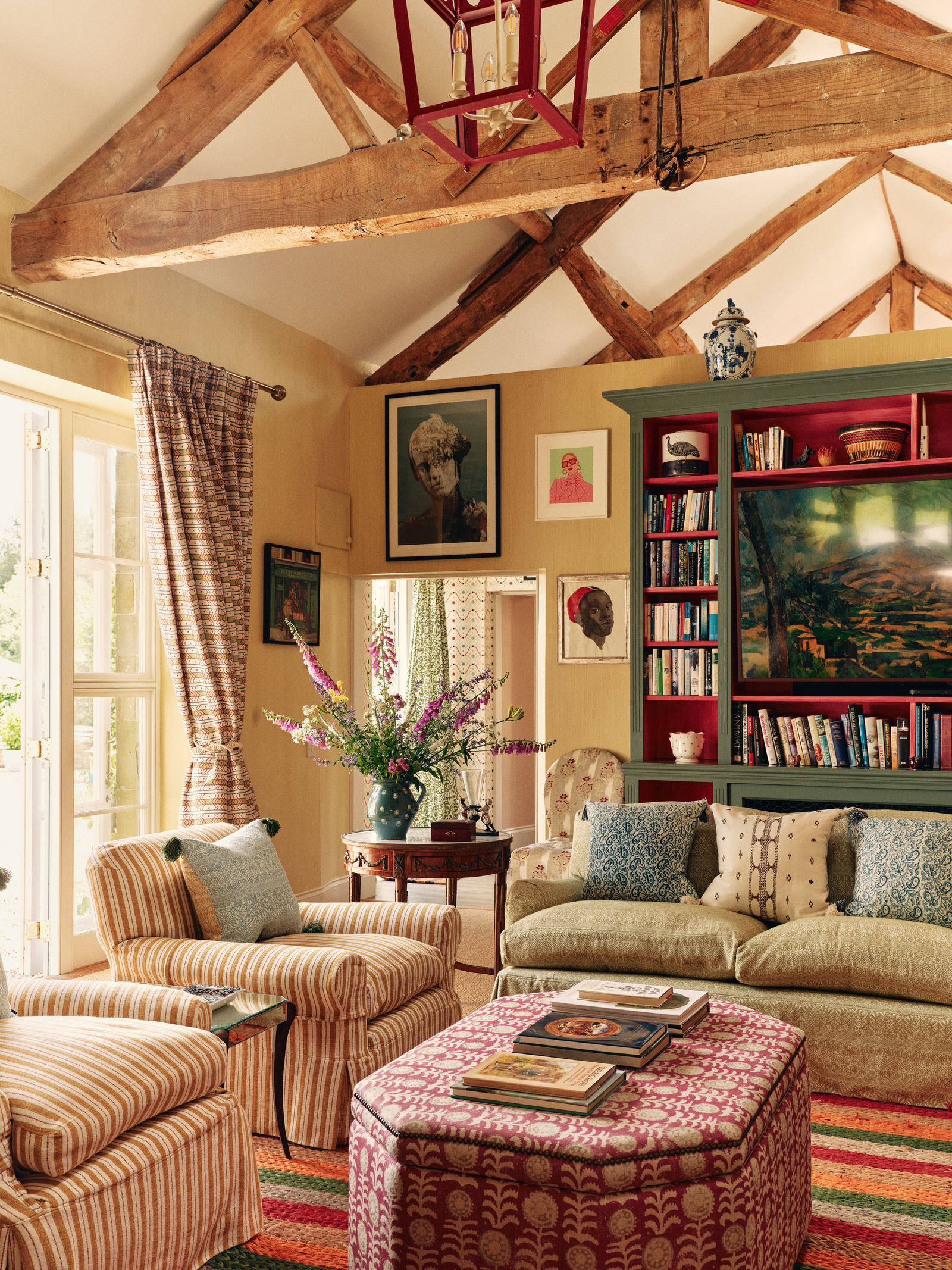
Every time he drives from his London flat to his cottage in Powys, Ted Morrison says there comes a moment when the air feels different. Leaving the motorway, A-roads give way to winding lanes, ‘I feel instantly de-stressed,’ he says. The landscape becomes greener with every mile. ‘I know I’m home.’
When he gets to the cottage, the ritual is always the same: a stiff drink made in the bijou bar adjoining the drawing room. With Ottoline’s ‘Improvisation Number 1’ wallpaper, glass shelves and illuminated cabinetry, it’s a pocket-sized party of a room – and one you might not expect to find squeezed into a converted stable block. For Ted and his wife Olivia, however, it is a must-have. Guests are often invited for the weekend ‘and you can’t ask people to drive hours and not fulfil their every need when they arrive,’ he says. So the ice tray is never empty, there are umpteen places to flop, and flowers on every bedside table. These are the things Ted calls ‘the critical non-essentials’.
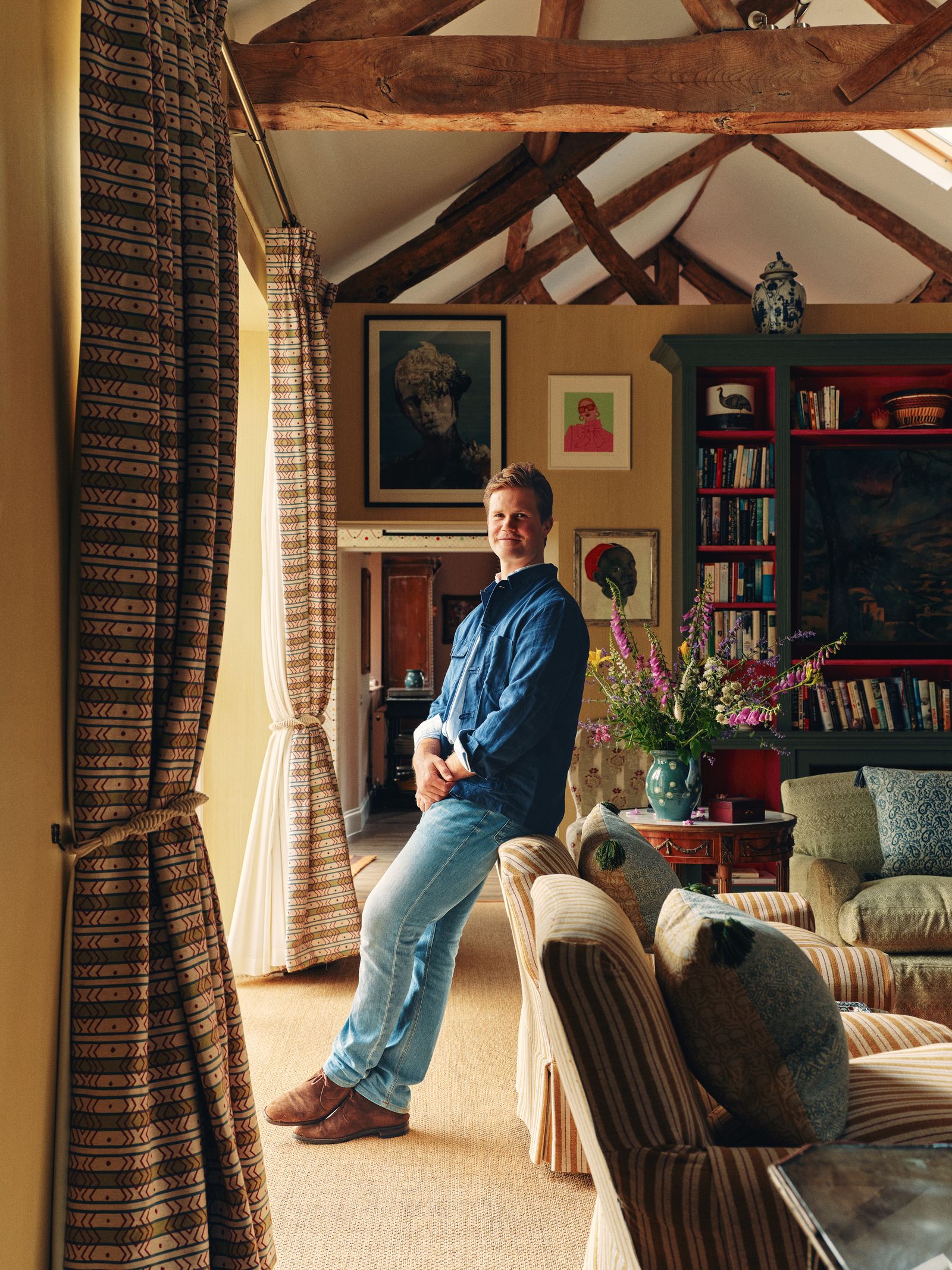
Such consummate hosting has shaped much of this country house in cottage form. It’s what Ted knows – he grew up nearby, the son of art dealer Guy Morrison and decorating doyenne Penny Morrison. His mother retired a couple of years ago and Ted now owns her soft furnishings business, of which he is the managing director. His was a childhood of ‘bells and whistles’ house parties filled with family friends from London, set against – as one might imagine – a backdrop of impeccable togetherness: a perfect mismatch of old and new, pattern, colour and texture that looked as if it had been there forever. Watching his parents designing a home as much around the enjoyment of others as themselves has left its mark on Ted. ‘I wanted our house to be just as fun,’ he says. ‘A retreat from the rat race.’
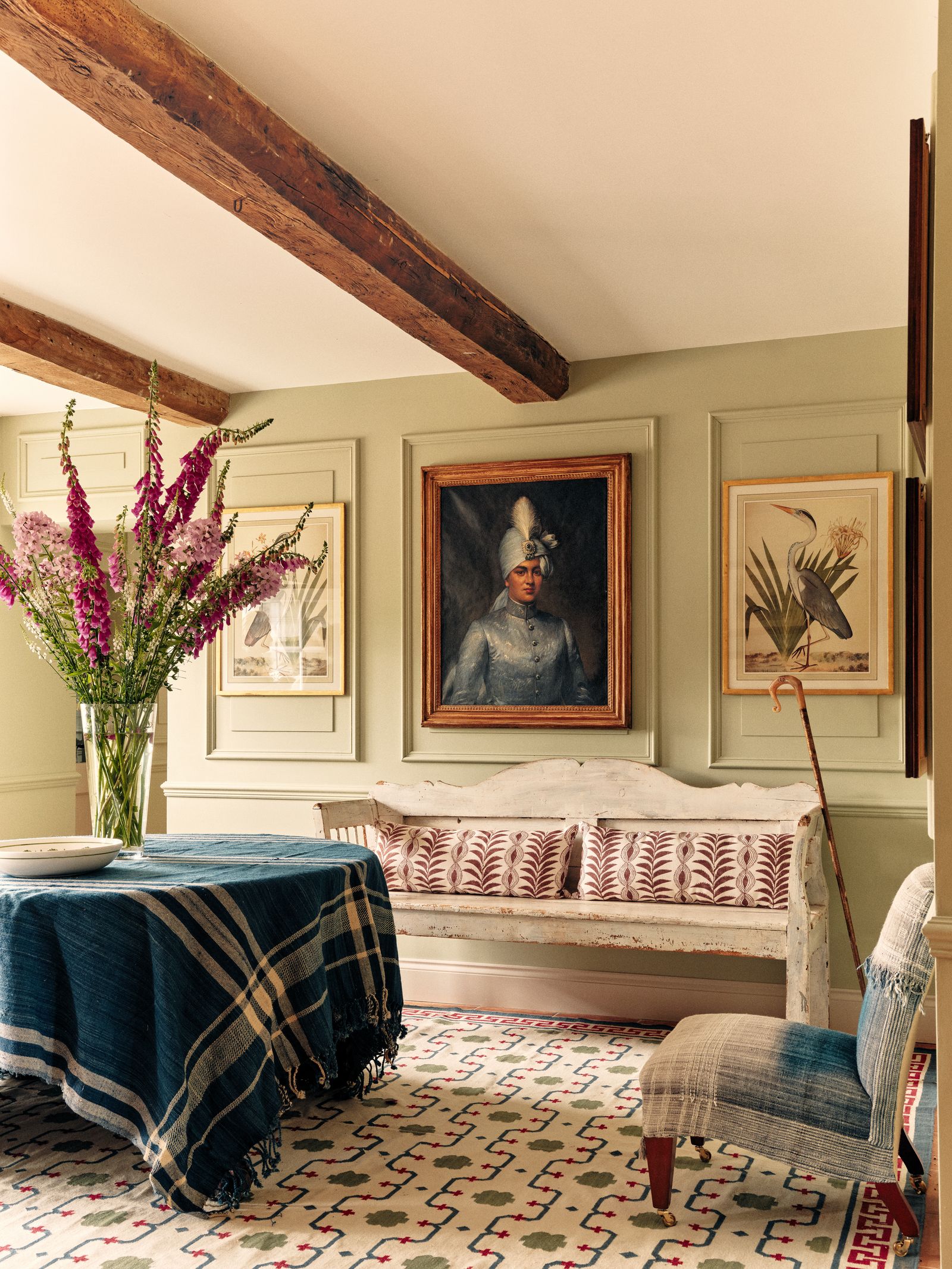
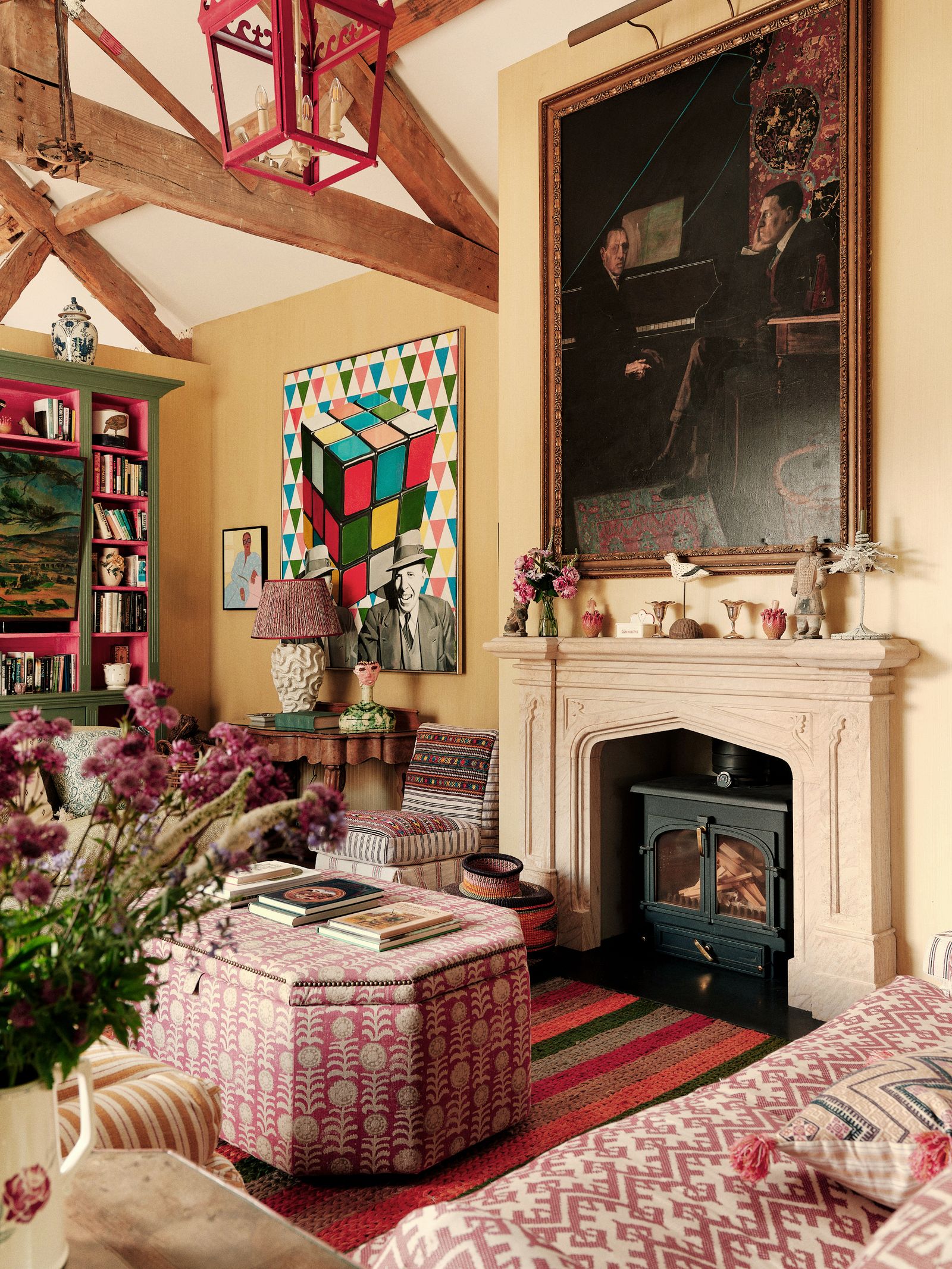
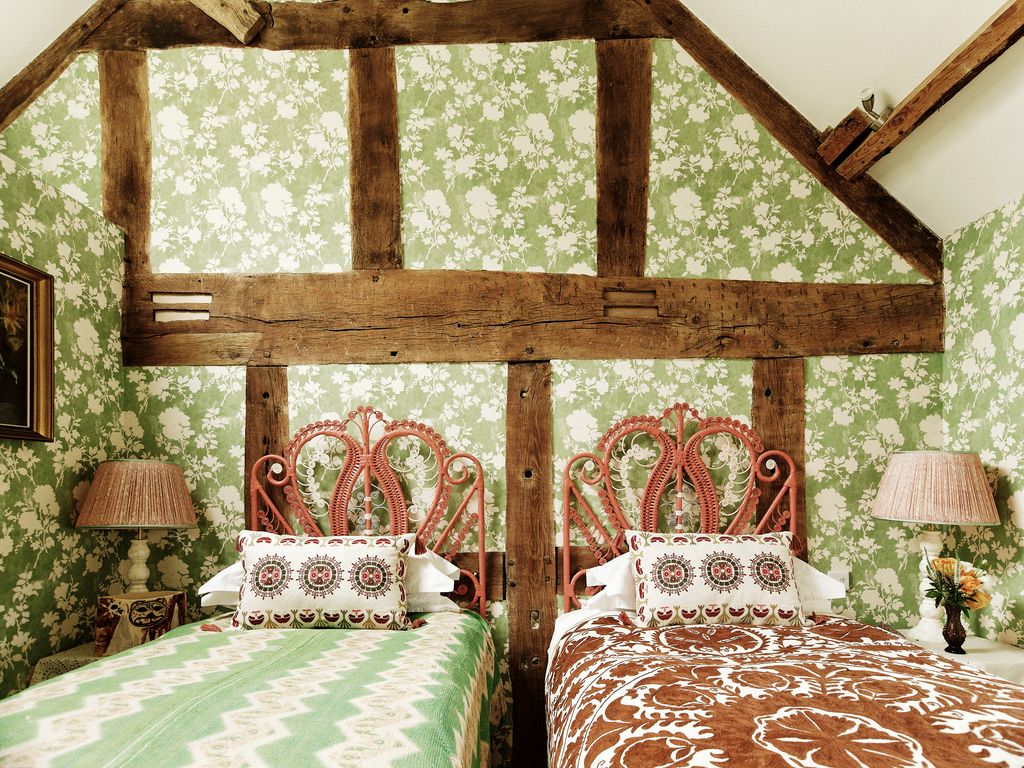
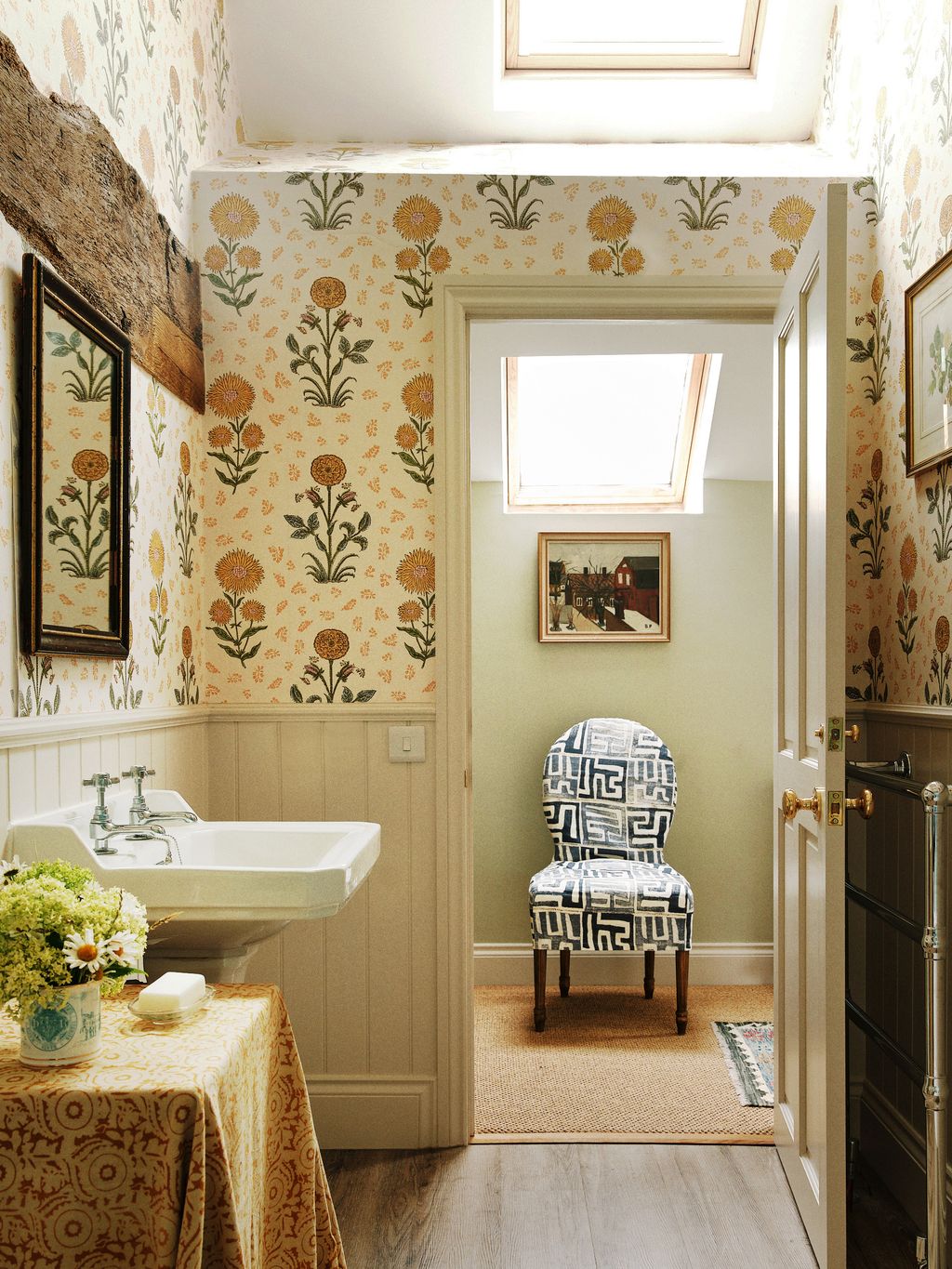
Penny’s distinctive style – layered, quintessentially English but culturally rich – has had a bearing on the cottage too. There are suzanis and kanthas aplenty, but the company’s own designs are present too, along with those it represents as The Fabric Collective (Ottoline among them). It was a conscious move by Ted, who saw the chance to use the house – just 10 minutes from the factory warehouse – to showcase the brand’s designs. But it is, Ted explains, also his taste, albeit a little dialled up.
He and Olivia, a plastic and reconstructive surgeon at The Royal Marsden, spend weekends only here and, as such, could afford to be a little more flamboyant. ‘I wanted it to feel like staying in a wonderful hotel,’ says Ted. ‘The kind of place you can’t wait to get to. Indulgent, riotous, an assault on your senses. You can’t do that in a place where you spend all of your time.’
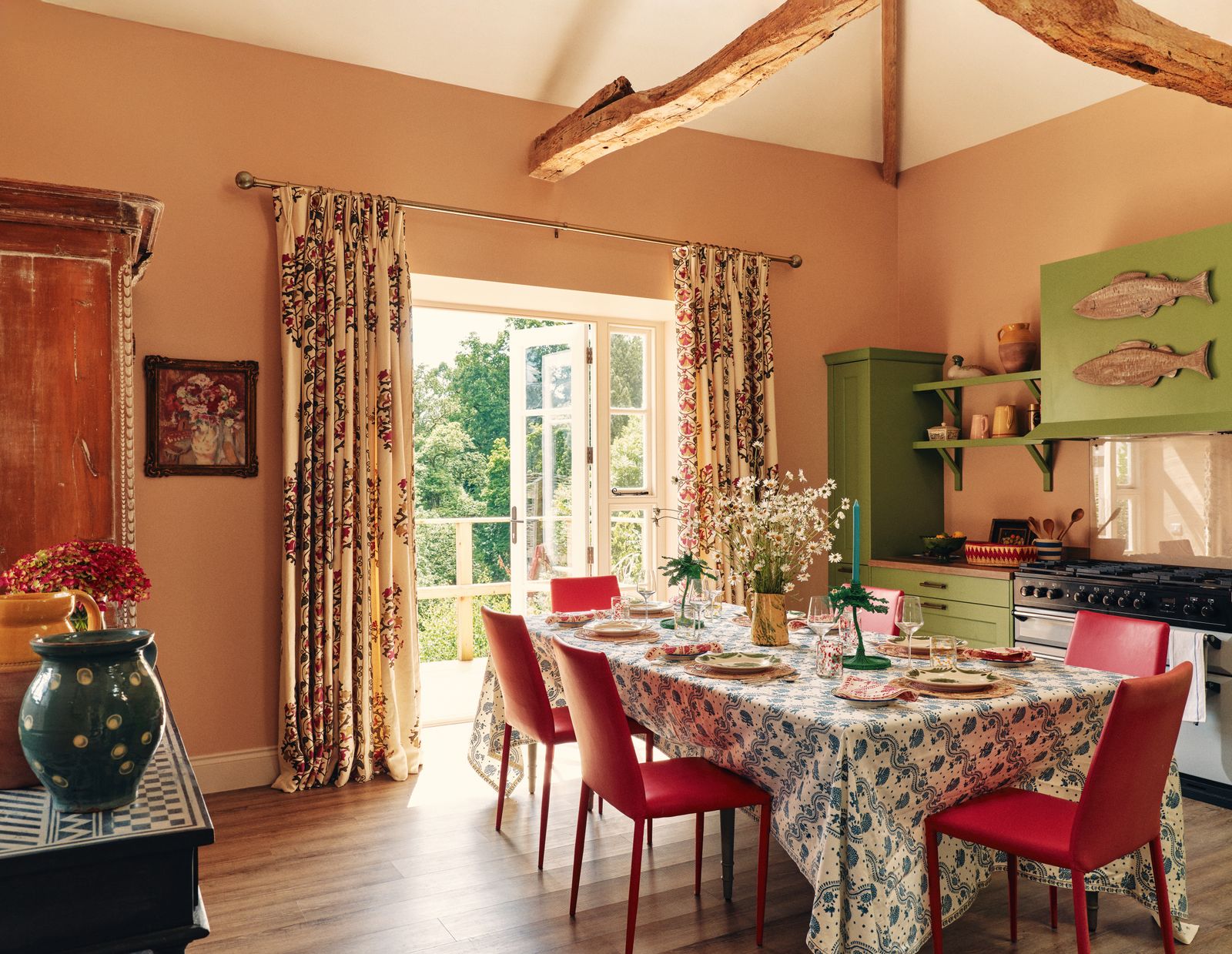
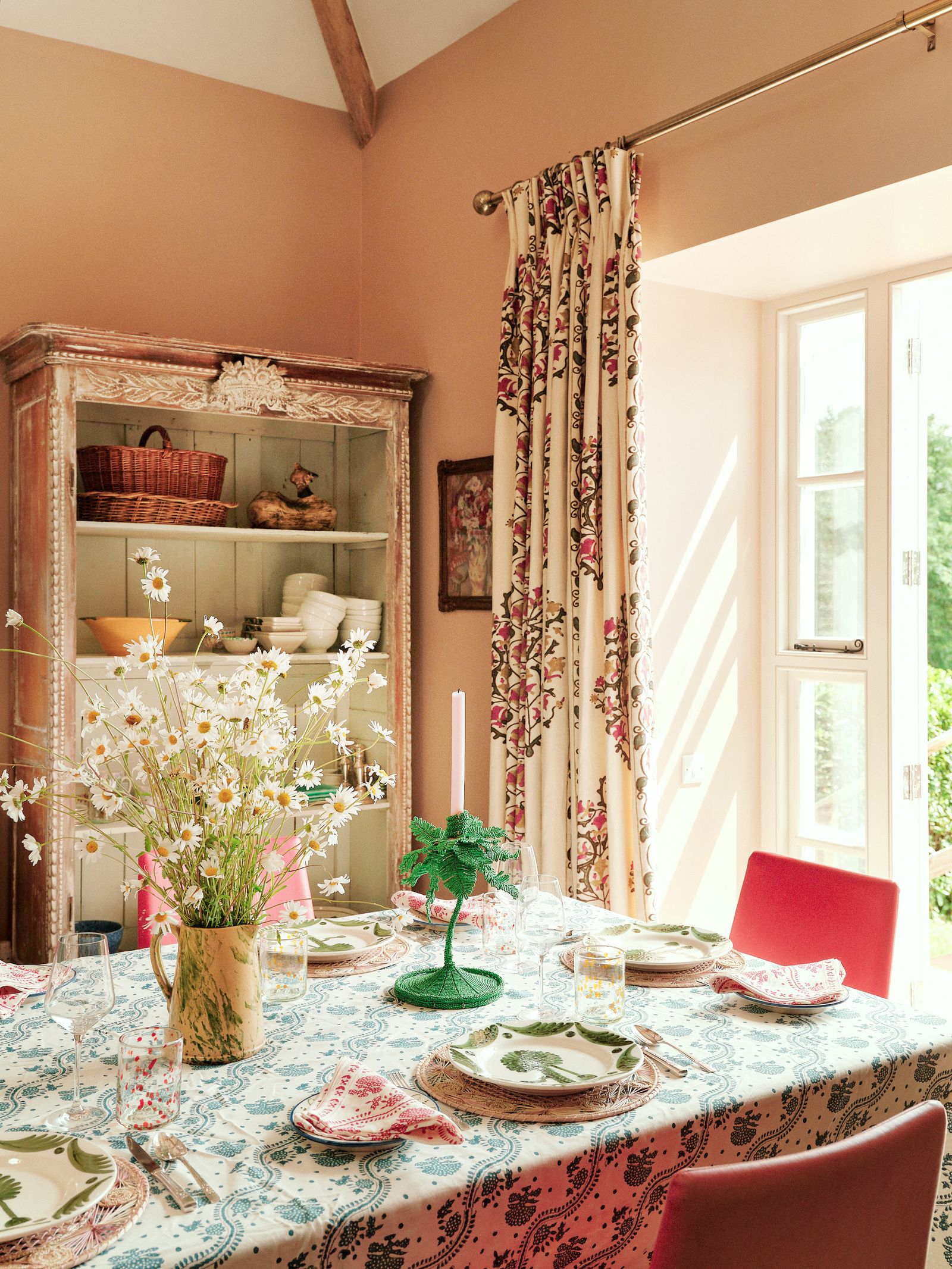
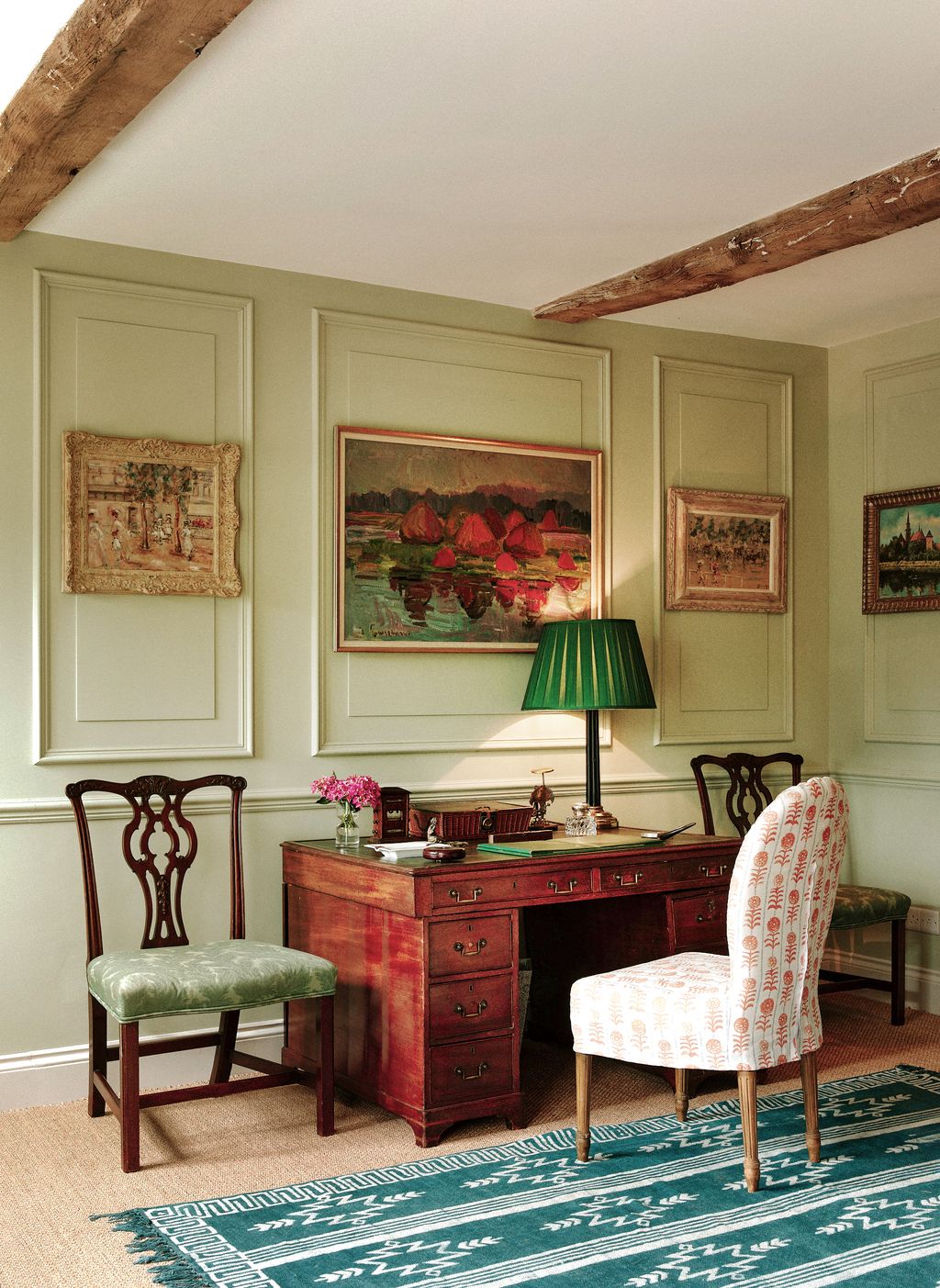
Stepping into this house is a sensory experience. Ted, who is adamant he is not a decorator, does himself a disservice, as he has an instinctive eye for not just pattern and colour, but also the subtler attributes that make a room work: composition, line and flow. The interiors feel effortless, but are properly thought through: hence that bar – discrete enough to feel gloriously special, close enough that you don’t miss a single word.
Ted has also inherited the curse, peculiar to decorators, of never quite being finished. ‘I’m constantly moving furniture, rearranging pictures, thinking about new things to try,’ he says, admitting a yearning for that hit you get when, having played around with something, you feel it just works. ‘The dopamine soon wears off, though. Then it’s on to the next experiment.’
But though this cottage has a strong interior focus, life here is also linked to the world around it. Ted and Olivia’s Saturday mornings – with or without friends – are spent walking, often taking the two-hour route to the pub. Cooking is important, too, as is shopping, with several market towns nearby: ‘We can go to a butcher who’s been here for 30 years, or a greengrocer I’ve visited all my life,’ Ted adds. He paints a picture of a disappearing sort of existence, where flocks of sheep block the road at some point and there’s always a tractor trundling ahead. ‘It forces you to slow down,’ he says. ‘You can just breathe a little easier here’.
 Tom Griffiths1/7
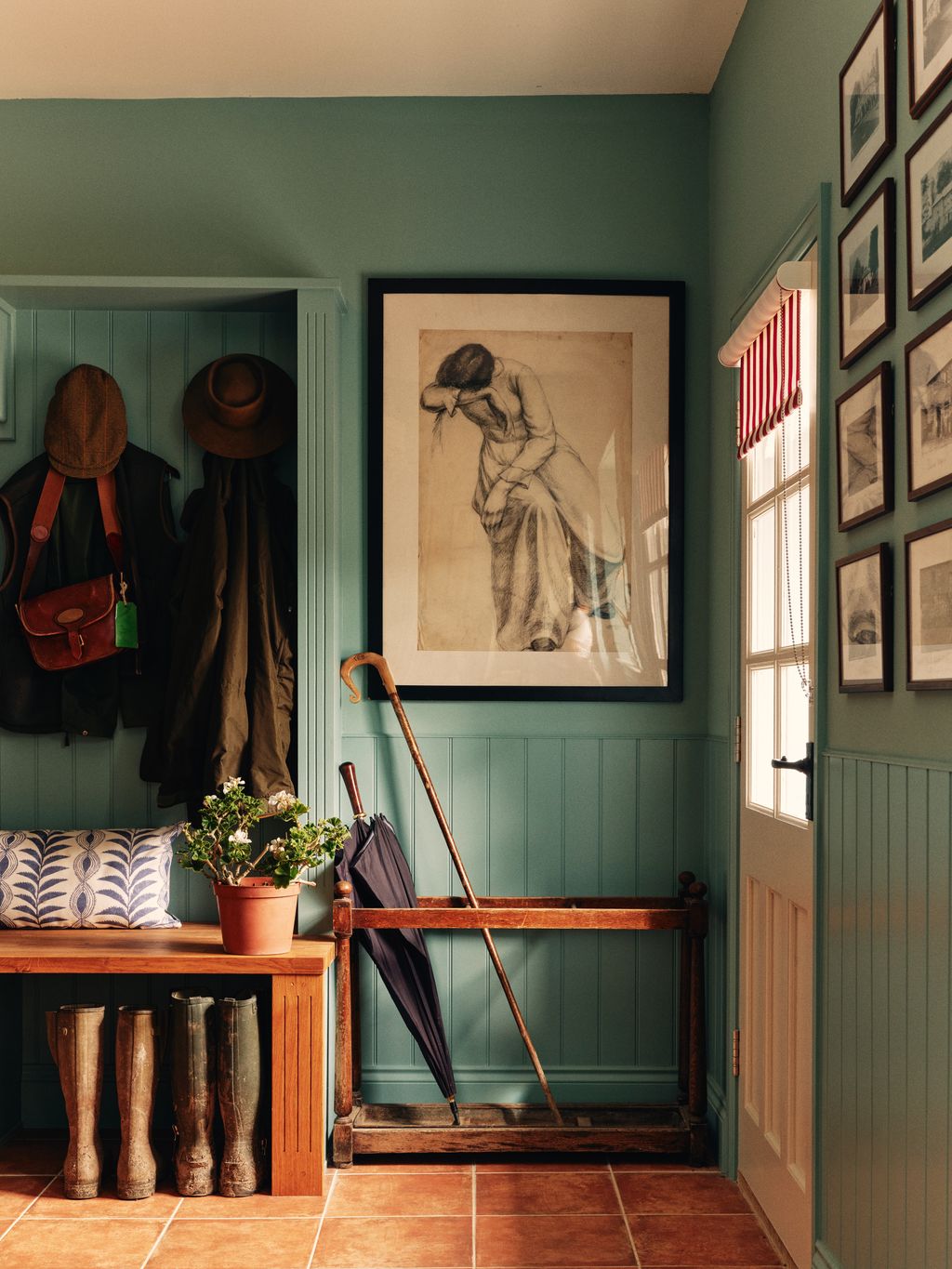
Walls in Farrow & Ball’s ‘Green Blue’ showcases an antique charcoal drawing and old local photographs.
 Tom Griffiths2/7
 Tom Griffiths3/7
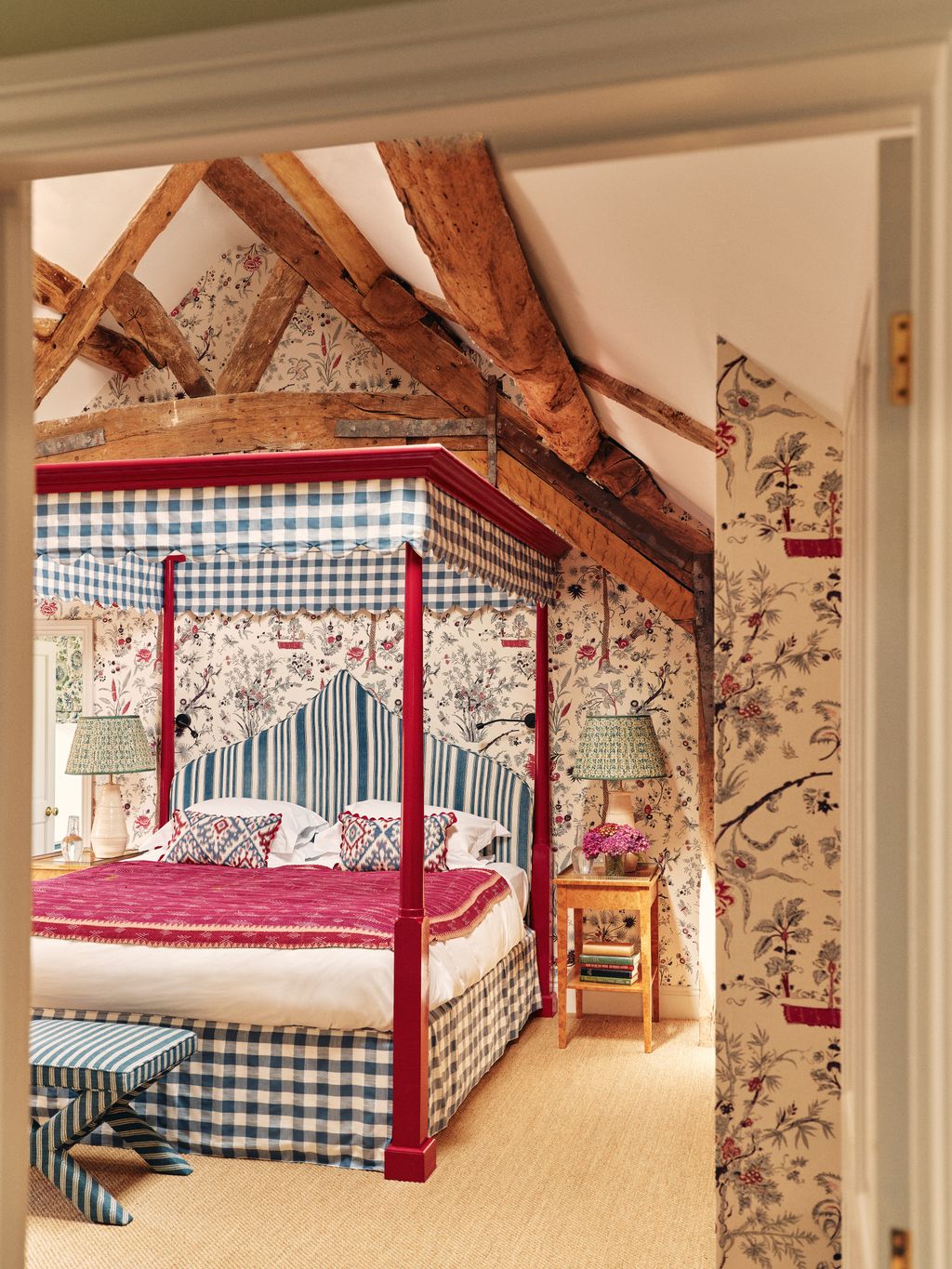
Vintage French checked and striped fabrics dress a custom four-poster. The ‘Phoebe’ wallpaper is a favourite design of Ted’s from his mother Penny Morrison’s collection.
 Tom Griffiths4/7


 Tom Griffiths5/7
 Tom Griffiths6/7
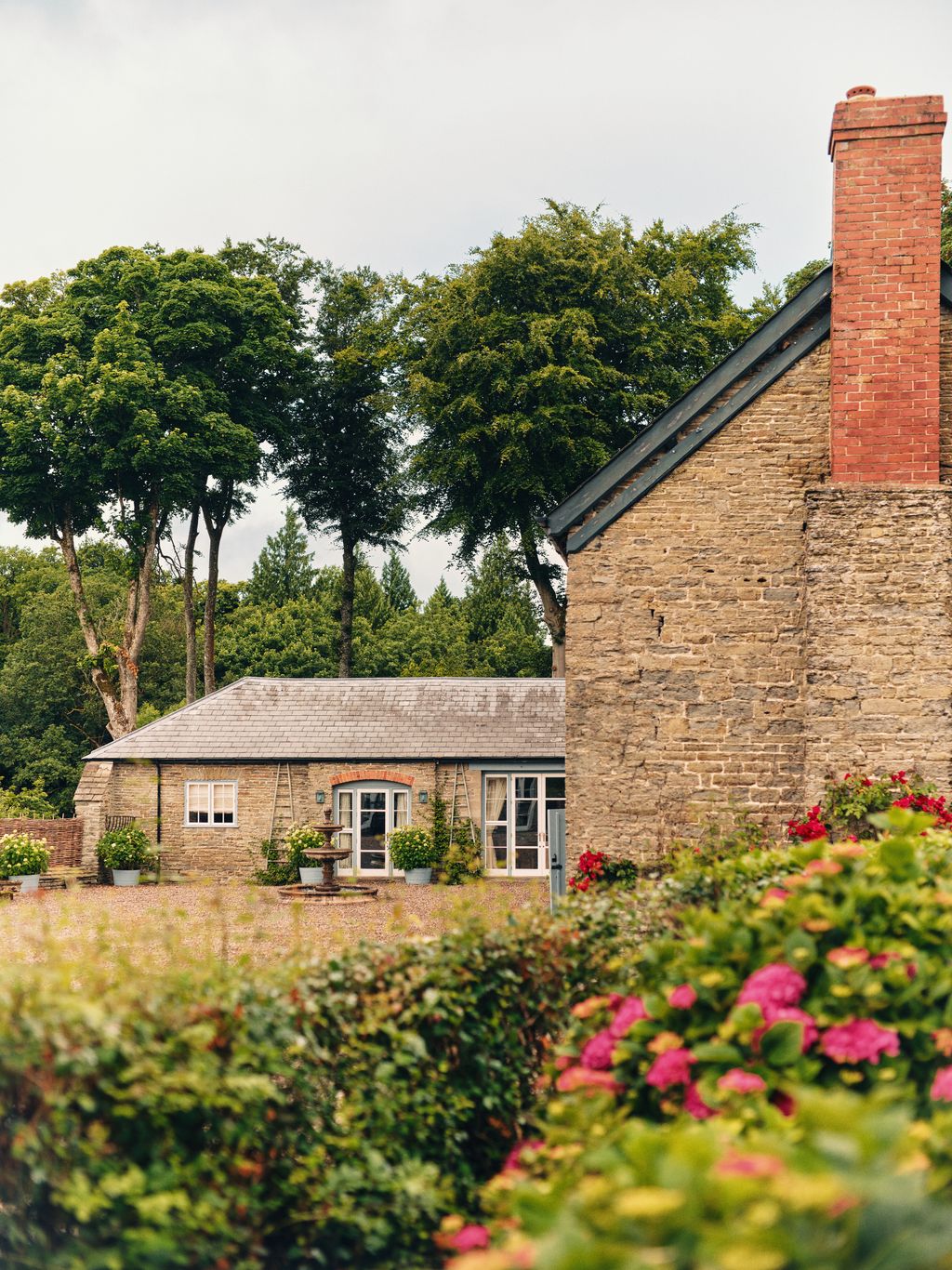
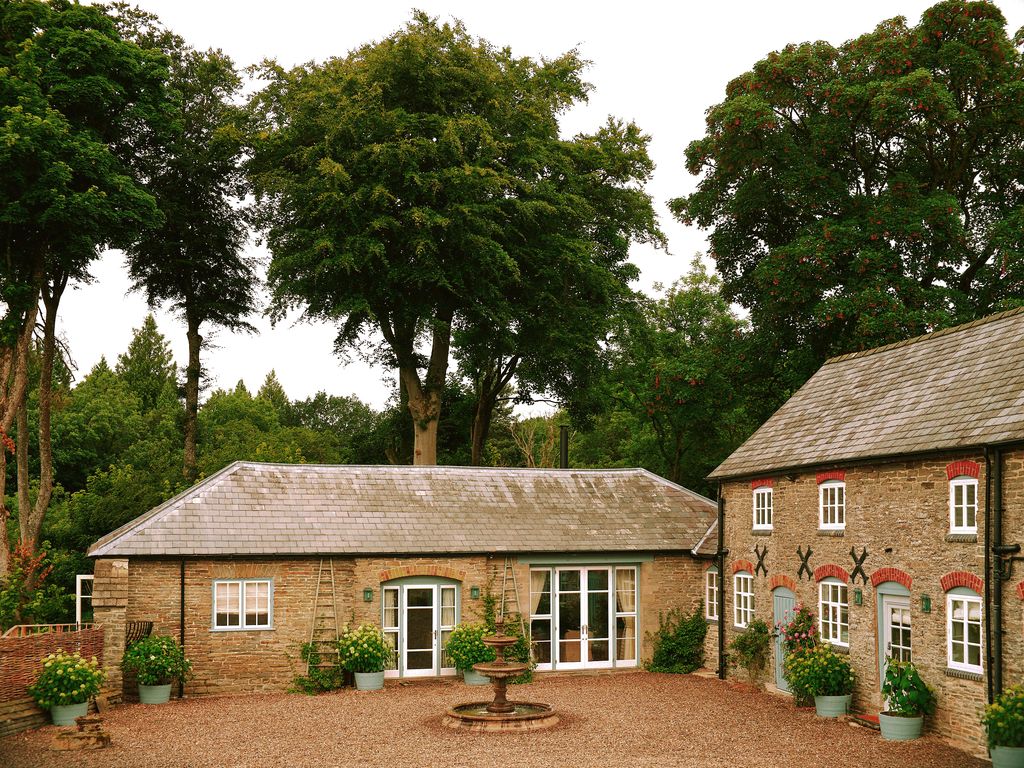
The 19th-century stone cottage is framed by tall mature trees and woodland.
 Tom Griffiths7/7


